Septic Problems After Heavy Rain in White Mountain Lake, AZ: A Monsoon Guide
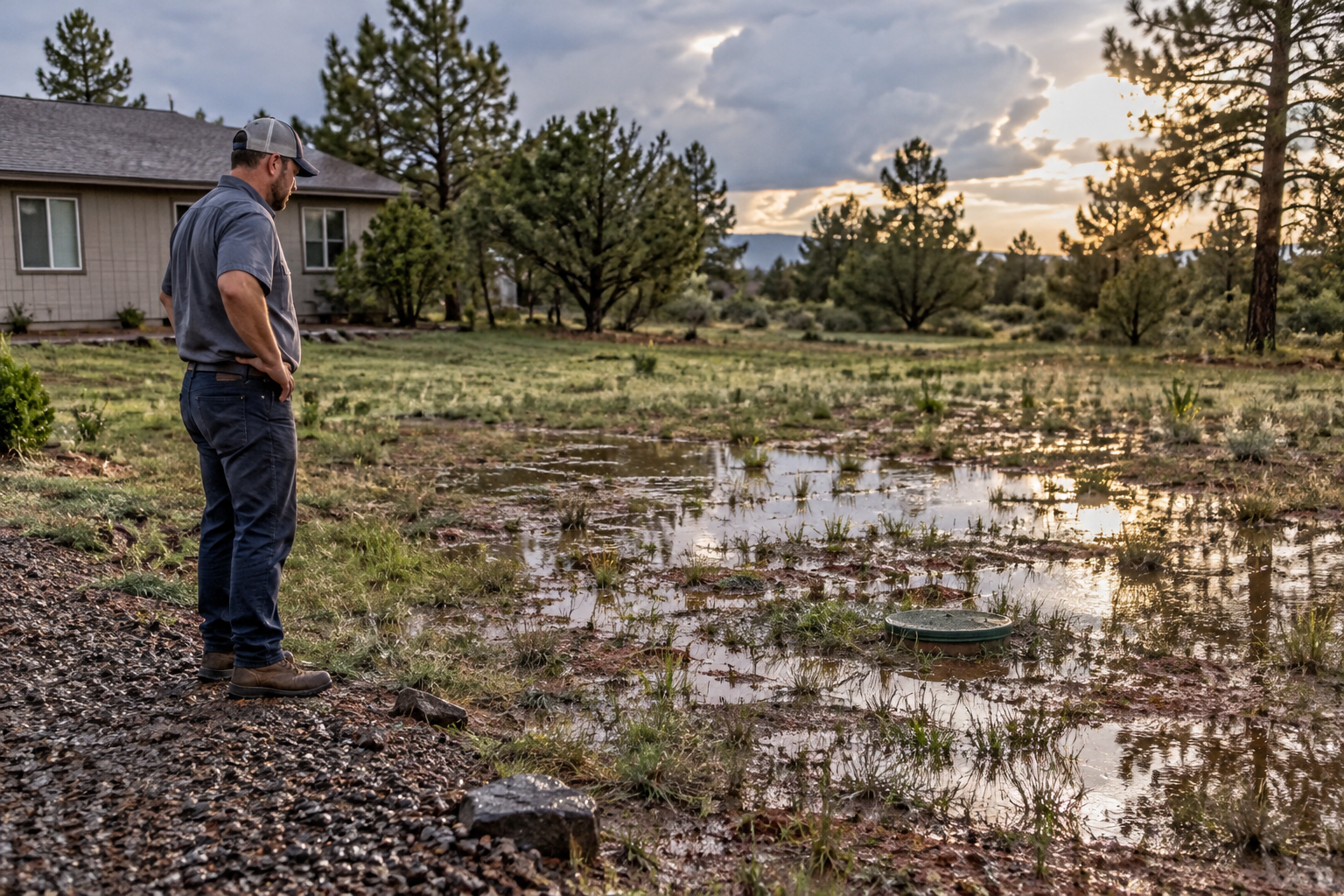
Monsoon rain can saturate the soil around a septic drainfield, making it harder for wastewater to disperse and potentially causing slow drains, odors, or backups. If you notice septic problems after heavy rain in White Mountain Lake, AZ, reduce household water use, avoid wet areas near the system, and arrange an evaluation rather than assuming pumping alone will solve the problem.
Why does heavy rain affect septic systems in White Mountain Lake?
Heavy rain can fill the soil’s available pore space, limiting how effectively a drainfield accepts wastewater. Stormwater may also enter through damaged or poorly sealed tank components, adding water the system was not designed to handle.
A septic tank separates solids from wastewater; the drainfield handles the liquid leaving the tank. When surrounding soil becomes saturated, that liquid may move away too slowly. Continued laundry, showers, and toilet flushing can then add to an already overloaded system.
Rain does not automatically mean a tank needs pumping. Similar symptoms can result from a clogged pipe, damaged components, or an existing drainfield problem that becomes more noticeable during wet weather. The timing of symptoms helps narrow the possibilities, but it does not establish the cause.
Which warning signs need prompt attention?
Sewage backing up indoors, wastewater surfacing outdoors, or several fixtures draining slowly at once warrant prompt professional attention. A single slow sink may be a localized plumbing issue, but widespread symptoms suggest a problem farther along the wastewater path.
Watch for these changes during and after a storm:
- Toilets gurgling when another fixture drains.
- Multiple sinks, showers, or toilets draining more slowly than usual.
- Sewage odors near the tank or drainfield.
- New puddles or unusually soggy ground over the system.
- Wastewater appearing in a shower, tub, or other low fixture.
Standing water alone does not prove sewage is present, especially immediately after rain. However, do not walk through suspect puddles to investigate. Keep children and pets away, and avoid driving equipment over wet septic areas.
An indoor sewage backup is not a wait-and-see situation. Stop using affected fixtures, minimize wastewater production, and seek professional help. Avoid contact with contaminated water and arrange appropriate cleanup.
What should you do immediately after a monsoon storm?
Reduce the water entering the septic system and protect the tank and drainfield from traffic. Do not open tank lids, dig into saturated ground, or attempt to pump out the system yourself.
Use this practical checklist:
- Postpone laundry and dishwasher loads until the situation has been assessed or conditions improve.
- Keep showers brief and avoid unnecessary flushing.
- Pause irrigation over or near the drainfield.
- Check gutters and downspouts from a safe location; note any discharge toward septic components.
- Record when symptoms started and which fixtures are affected.
- Photograph unusual wet areas from dry, stable ground.
A useful troubleshooting detail is whether drains were slow before the storm. Tell the service provider if problems already existed, if they happen after every heavy rain, or if this is the first occurrence. That history is more informative than simply reporting that the tank seems full.
Do not run extra water to “test” a struggling system. Repeated flushing can turn a drainage complaint into an indoor backup without identifying the cause.
Will septic pumping fix rain-related problems?
Septic Pumping removes accumulated tank contents, but it cannot make saturated drainfield soil absorb water faster. The appropriate response depends on whether the issue involves solids buildup, excess groundwater, damaged components, or another obstruction.
A common mistake is assuming that a tank containing liquid must be overdue for pumping. Septic tanks normally operate with liquid inside them; a professional considers operating levels, solids accumulation, and other observations rather than liquid presence alone.
During flooded or high-groundwater conditions, pumping also requires caution. Emptying a tank under unsuitable conditions can create a risk of movement or structural damage, so a qualified professional should determine whether and when pumping is appropriate.
Atteberry Septic & Portable Toilets provides Septic Pumping, Septic Inspections, and Septic Repair. These services address different needs: removing accumulated material, evaluating system condition, and correcting identified defects. They are not interchangeable solutions.
How can you reduce problems before the next storm?
Keep surface runoff away from septic components, maintain the system, and address recurring symptoms before another storm. Preventive steps reduce avoidable loading, although they cannot eliminate every groundwater or drainfield issue.
Know where your tank, access points, and drainfield are located. Keep vehicles and stored materials off those areas, and have damaged covers or suspected leaks evaluated. Do not alter drainage, add fill, or excavate around the system without appropriate professional guidance.
Inside the home, repair leaking fixtures and spread laundry loads across the week. Outdoors, review where roof runoff travels, but avoid redirecting water onto neighboring properties or other problem areas. The company’s septic maintenance dos and don’ts offer additional everyday guidance.
Whether your property is in White Mountain Lake, Linden, or Snowflake, base maintenance decisions on the actual system and household use—not just the weather forecast.
Frequently Asked Questions
Rain-related symptoms do not always mean permanent system failure, but recurring problems deserve evaluation. These answers clarify common next steps.
Should I wait until the ground dries out?
Not if sewage is backing up or surfacing. Reduce water use and contact a professional promptly; safe inspection or pumping timing may depend on ground conditions.
Can septic additives fix a saturated drainfield?
No additive removes groundwater or restores the soil’s available drainage space. Avoid treating additives as a substitute for diagnosis, maintenance, or necessary repairs.
What should I share when requesting service?
Describe the affected fixtures, when symptoms began, recent rainfall, and any known maintenance history. Mention visible standing water without approaching or opening the tank.
For rain-related septic concerns in White Mountain Lake, contact Atteberry Septic & Portable Toilets, based in Show Low and serving Arizona’s White Mountains. Describe what changed after the storm and ask about the appropriate next step for your system.