
What Septic Pumping Removes—and What It Cannot Fix
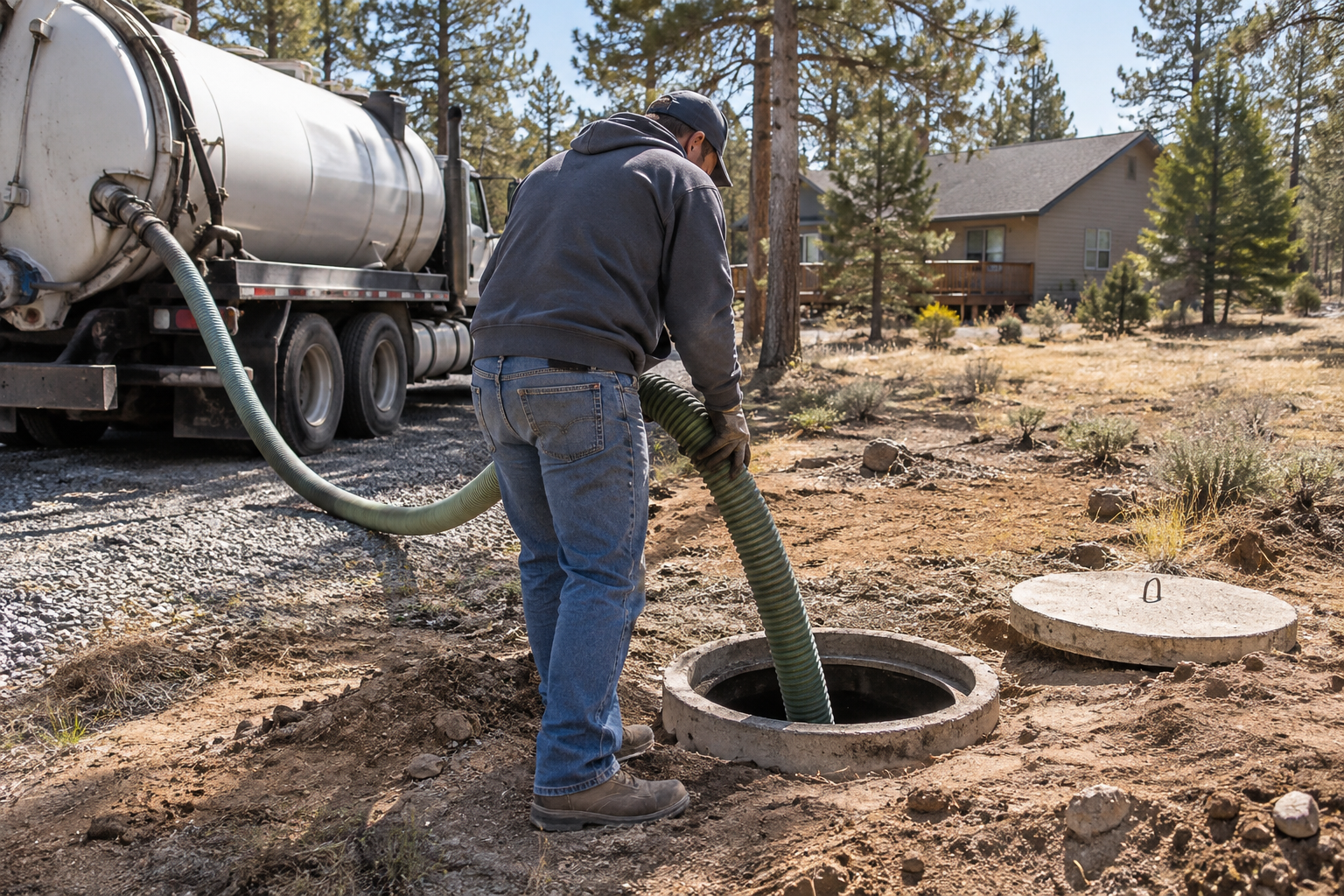
Septic pumping removes accumulated sludge, floating scum, and wastewater from a septic tank, helping keep solids from moving into the drainfield. It does not repair broken pipes, damaged tank components, or a failing drainfield, so recurring backups, odors, or wet ground may need diagnosis rather than another pump-out.
What does septic pumping remove from the tank?
Septic pumping removes the tank’s accumulated contents: settled solids at the bottom, floating material at the top, and liquid between them. Its main maintenance purpose is to remove solids that would otherwise reduce the tank’s effective settling capacity.
Wastewater separates into three general layers inside a functioning septic tank:
- Sludge: Heavier material that settles to the bottom, including solids that do not fully break down.
- Scum: Floating fats, oils, grease, and other buoyant material at the surface.
- Effluent: The liquid between those layers, which normally flows onward for treatment in the drainfield.
Bacterial activity breaks down some waste, but it does not make every solid disappear. As sludge and scum accumulate, less space remains for wastewater to settle properly. Removing that buildup helps limit solids carryover, which can contribute to downstream clogging.
A pump-out is not simply removing liquid until the tank looks empty. Discuss access to all compartments and removal of accumulated solids with the service provider. Atteberry Septic & Portable Toilets offers Septic Pumping for properties in its service area.
How is septic pumping different from cleaning and inspection?
Pumping removes tank contents; cleaning may involve additional work to loosen and remove stubborn deposits. An inspection evaluates system condition, and neither an empty tank nor a completed pump-out proves that the entire system works correctly.
Service terminology varies, so ask what is included rather than assuming that pumping and cleaning mean the same thing. In particular, clarify whether the work addresses all tank compartments, whether an accessible effluent filter needs separate service, and whether any additional cleaning is warranted.
Opening and pumping a tank can provide an opportunity to observe accessible components. However, that is not automatically a comprehensive inspection of buried piping, electrical equipment, distribution components, or drainfield performance.
If you are investigating repeated symptoms or evaluating a property purchase, discuss Septic Inspections separately. Explain the purpose of the evaluation so the inspection scope matches the question you need answered.
Which problems cannot be fixed by pumping alone?
Pumping cannot restore broken components or correct a drainfield that no longer accepts wastewater properly. It may temporarily relieve symptoms by creating space in the tank, but temporary relief is not proof that the underlying problem is resolved.
Common problems requiring further evaluation include:
- Blocked or damaged pipes: A clog between the house and tank, root intrusion, or a collapsed line needs targeted attention.
- Damaged baffles or tees: These components help control flow and retain solids; pumping does not replace missing or broken parts.
- Tank defects: Cracks, leaks, and unsafe lids require assessment and appropriate repair.
- Pump or control failures: Systems with electrical components may need troubleshooting beyond tank pumping.
- Drainfield problems: Saturated soil, restricted distribution, or long-term clogging cannot reliably be corrected by emptying the tank.
- Excess water entering the system: Leaking fixtures or groundwater intrusion can continue overloading the system after a pump-out.
A septic tank normally returns to its operating liquid level as the household uses water. That alone does not mean the pumping failed. Liquid above the expected operating level, recurring backups, or persistent surface seepage are different concerns and warrant investigation.
For a confirmed component problem, Septic Repair may be the appropriate next step rather than repeated pumping.
How can you choose the right next step?
Use maintenance history and current symptoms together to decide whether to request routine pumping or diagnostic help. Slow drains, odors, and backups are warning signs, but they do not identify the cause by themselves.
For a home in Show Low or elsewhere in Arizona’s White Mountains, a clear description of what is happening is more useful than assuming every septic symptom means the tank needs pumping.
Before arranging service:
- Find the last pumping record and any inspection or repair reports.
- Note whether one fixture or multiple drains are affected. A single slow fixture may have a local plumbing blockage.
- Record when symptoms occur, including whether they follow heavy water use or wet weather.
- Mention alarms, sewage odors, backups, or unusually wet ground near the system.
- Identify tank access locations if known, without opening lids yourself.
- Ask whether the appointment is for maintenance, diagnosis, or both.
If sewage is backing up, reduce water use and seek professional help promptly. Keep people and pets away from wastewater and affected ground. Never enter a septic tank or lean into an opening; hazardous gases and fall risks can be fatal.
This is general guidance, not a diagnosis. The right pumping interval and any needed repairs depend on the tank, household use, accumulated solids, and system condition.
Frequently Asked Questions
Pumping is preventive maintenance, not a universal repair. These distinctions help set realistic expectations before service.
Will septic pumping stop odors?
It may help if excessive buildup contributes to the problem, but odors can also come from plumbing traps, venting issues, leaks, or other defects. Persistent odors need their source identified.
Should I wait until drains back up to schedule pumping?
No. Pumping should be planned around system conditions and use rather than waiting for a backup. Maintenance records and sludge and scum measurements can help establish an appropriate schedule.
Does a pumped tank need additives to restart?
Routine household wastewater generally supplies the microorganisms a septic tank needs. Additives are not a substitute for pumping or repair; follow system-specific professional guidance rather than assuming a product is necessary.
For help choosing between maintenance and further evaluation, contact Atteberry Septic & Portable Toilets, based in Show Low and serving Arizona’s White Mountains. Describe your symptoms and maintenance history to discuss Septic Pumping, Septic Inspections, or Septic Repair.