
Septic Repair Pinetop-Lakeside AZ: Should You Repair or Replace Your Tank?
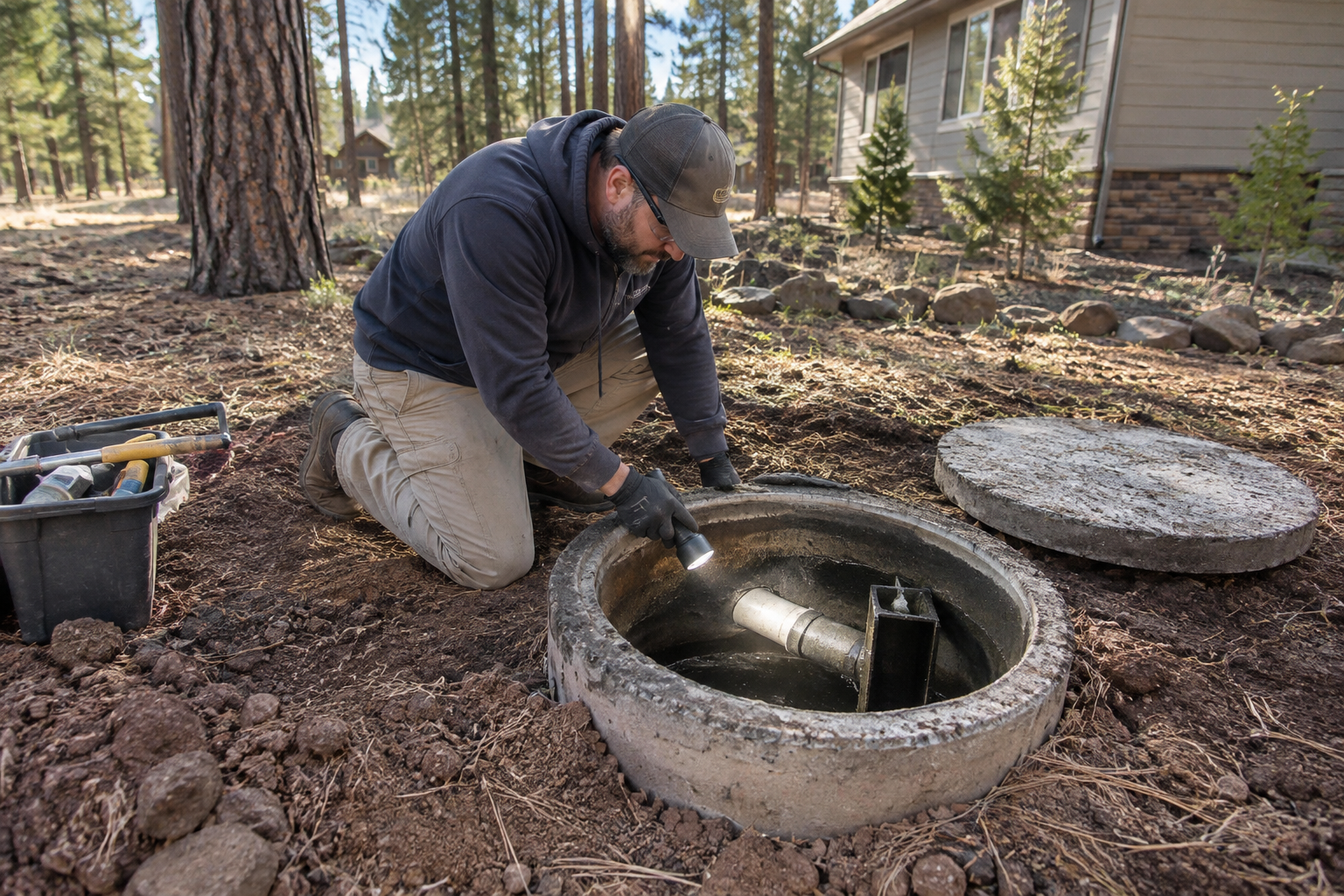
Septic repair is often the right choice when damage is limited to a pipe, baffle, or other serviceable component; tank replacement becomes more likely when the tank itself is structurally unsound. For Pinetop-Lakeside homeowners, the decision starts with identifying whether the problem is in the tank, plumbing, or drainfield—not assuming every backup requires a new system.
What determines whether a septic tank needs repair or replacement?
The tank’s structural condition and the location of the failure matter more than age alone. A sound tank with an isolated component problem may be repairable, while a deteriorated or unstable tank may require replacement.
A septic system includes more than its underground tank. Wastewater travels through the building sewer, enters the tank, and then moves toward a drainfield or another approved treatment arrangement. A restriction or failure anywhere along that route can produce similar symptoms inside the house.
On older properties, missing records can make diagnosis harder, but age does not establish that replacement is necessary. The useful question is: What has failed, and will the proposed work correct it?
Ask for findings that distinguish structural damage from a maintenance issue. That distinction helps prevent paying for a replacement tank when the actual problem lies elsewhere.
Which problems can septic repair address?
Repair may be appropriate for localized defects when the tank and the rest of the system remain serviceable. Examples include damaged accessible piping, a defective baffle, or a malfunctioning pump in a system that uses one.
The exact repair depends on system design, accessibility, and the condition of surrounding components. Potential repair candidates include:
- A blocked or damaged pipe between the house and tank.
- A damaged inlet or outlet baffle that can be restored appropriately.
- A defective effluent filter assembly, where one is installed.
- A failed float, alarm, or pump in a pumped system.
- A leaking connection that can be repaired without compromising the tank.
A practical diagnostic tip: note whether one fixture or several fixtures are affected. One slow sink may point to an indoor plumbing restriction; multiple slow drains can suggest a problem farther downstream. Neither observation proves the cause, but both help guide troubleshooting.
Atteberry Septic & Portable Toilets offers Septic Repair. Before authorizing work, ask which component needs attention and what evidence supports that recommendation.
When is tank replacement the better option?
Tank replacement may be necessary when structural deterioration, serious cracking, or instability makes continued use unsafe or an effective repair impractical. Replacement may also be part of a larger project if the existing system cannot meet the property’s approved wastewater needs.
Not every crack has the same significance. Its location, extent, leakage, and effect on structural integrity need professional evaluation. A surface observation alone is not enough to determine whether a tank can remain in service.
Importantly, replacing the tank does not automatically fix a failing drainfield. If wastewater cannot disperse properly downstream, a new tank may leave the original symptom unresolved.
Before agreeing to replacement, ask:
- Is the tank itself failing, or is the problem downstream?
- What findings rule out a targeted repair?
- Does the proposed scope include evaluating the drainfield?
- What permits, design review, or inspections will be required?
- What excavation and property restoration are included?
Confirm applicable requirements with the local permitting authority before replacement work begins. Do not assume a new tank can simply be installed in the same location without review.
What should Pinetop-Lakeside homeowners do before an inspection?
Reduce unnecessary water use, document symptoms, and gather available system records. These steps help protect the property and give the inspector a clearer picture of the problem.
If sewage is backing up or surfacing outside, stop nonessential water use and keep people and pets away from affected areas. Never enter a septic tank or lean into an open access point; hazardous gases and unsafe structures can be deadly.
Prepare the following information:
- When symptoms began and whether they are constant or intermittent.
- Which drains are affected and whether any alarms have activated.
- Dates of previous pumping, inspections, and repairs, if known.
- Any recent increase in occupancy or water use.
- Available permits, drawings, or tank-location records.
One common mistake is doing several loads of laundry to “test” a sluggish system. That adds wastewater without identifying the cause. Record what you have already observed instead.
Based in Show Low, Atteberry Septic & Portable Toilets serves Pinetop-Lakeside and nearby communities such as Linden and Vernon. Its Septic Inspections service is relevant when deciding what needs attention before committing to a repair scope.
How does pumping fit into the decision?
Septic pumping removes accumulated tank contents; it does not repair broken components or restore a failed drainfield. It may support an evaluation by making parts of the tank accessible for inspection.
A tank normally contains liquid during operation, so “the tank is full” is not, by itself, a diagnosis. Liquid level relative to the outlet, solids accumulation, and downstream performance provide more useful information.
Septic Pumping can address accumulated solids, but temporary improvement after pumping does not prove the underlying problem is resolved. Ask what follow-up evaluation is needed if symptoms return.
Frequently Asked Questions
Repair-versus-replacement decisions should follow documented findings rather than symptoms alone. These answers address common concerns before scheduling an evaluation.
Does a sewage odor mean I need a new tank?
No. Odors can have several causes, including plumbing vent issues or septic defects. Persistent odors deserve investigation, especially with backups or wet areas outside.
Can septic additives repair a damaged tank?
No. Additives cannot restore structural integrity or repair broken pipes and baffles. They are not a substitute for diagnosing a physical failure.
Should I replace the tank just because it is old?
No. Condition, performance, and applicable requirements should guide the decision. An inspection can help distinguish age-related concerns from an actual need for replacement.
For help evaluating septic repair in Pinetop-Lakeside, AZ, contact Atteberry Septic & Portable Toilets. Share your symptoms and available records to start a discussion about inspection, pumping, or repair.